
Roof repair in Papillion, NE: the part that failed, fixed
Most leaks we find come from one part, not the whole roof: a cracked pipe boot, a flashing joint at a chimney or wall, a few shingles the wind lifted, a nail that backed out. Dana climbs the roof, follows the water up the slope to that part, photographs it, and fixes it. If the rest of the roof is sound, she tells you so in writing, and you keep your roof.
- The leak traced to the part that failed
- A photo of the part before and after the repair
- A plain answer on how much life the rest has left
Tell us where it is leaking
We answer the same working day. After a hailstorm, into the evening.
Water coming through a ceiling right now? Call or text: 402-555-0163
The parts we repair most
Each one is a part of the roof that can fail on its own while the shingles around it are still sound.
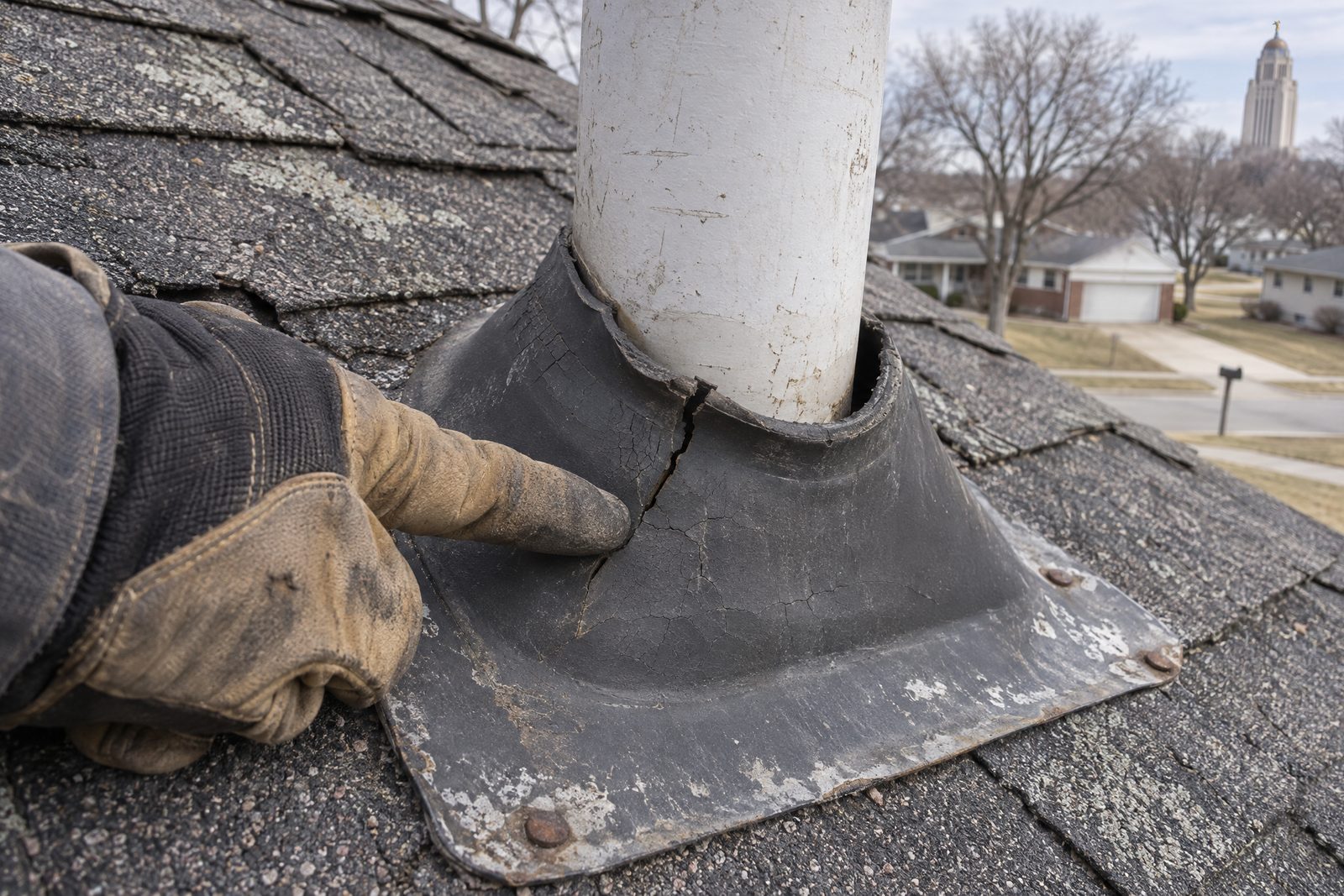
Pipe boots
The rubber collar round a plumbing vent cracks with age and sun, and water runs straight down the pipe. A new boot, slid under the course above, ends it.
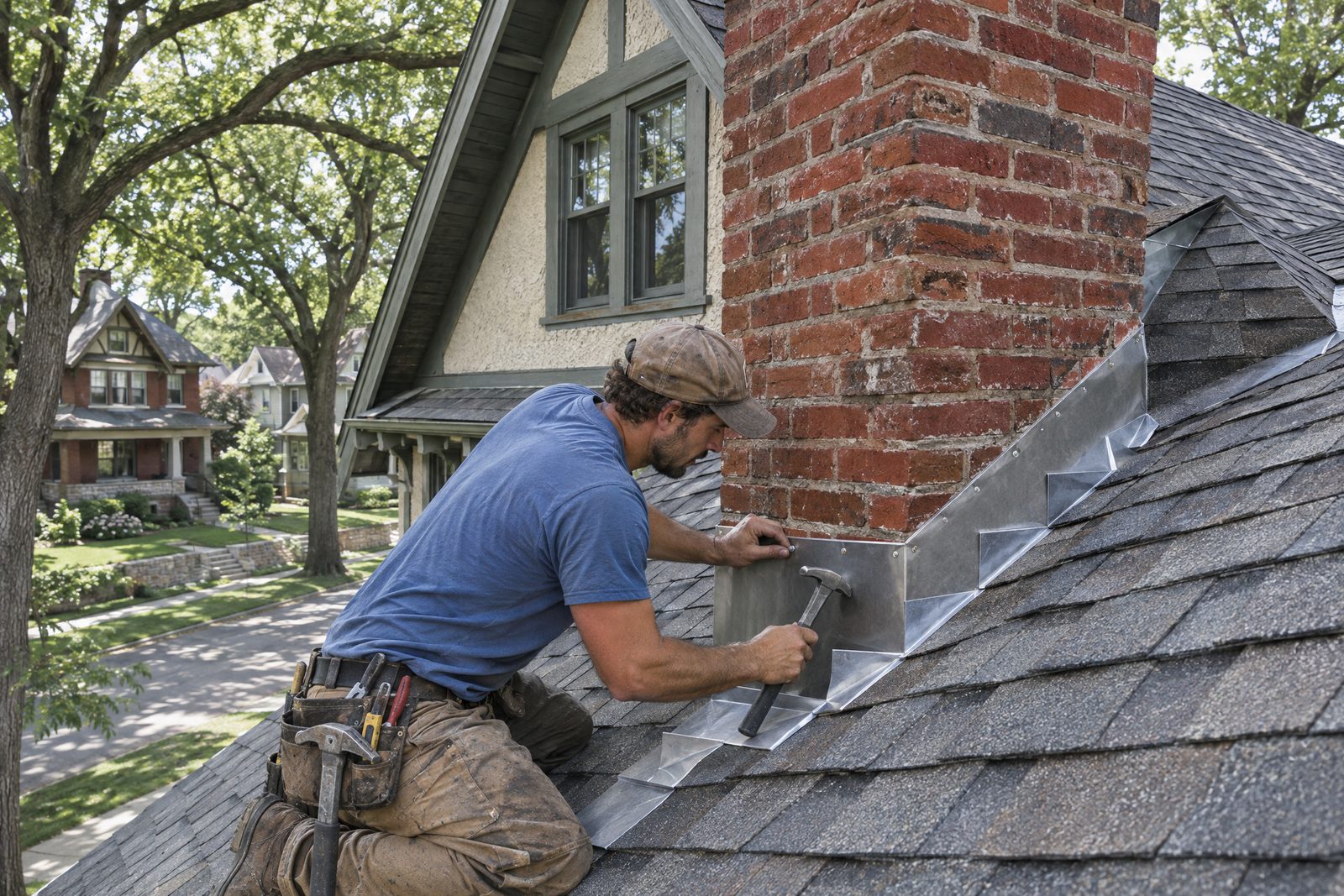
Chimney flashing
Step flashing along the sides, counterflashing set into the brick, and a cricket behind a wide chimney so water and snow do not pile up there.
Wall and dormer flashing
Where a roof runs into siding, each shingle course needs its own step flashing. Caulk over a missing one only lasts a season.
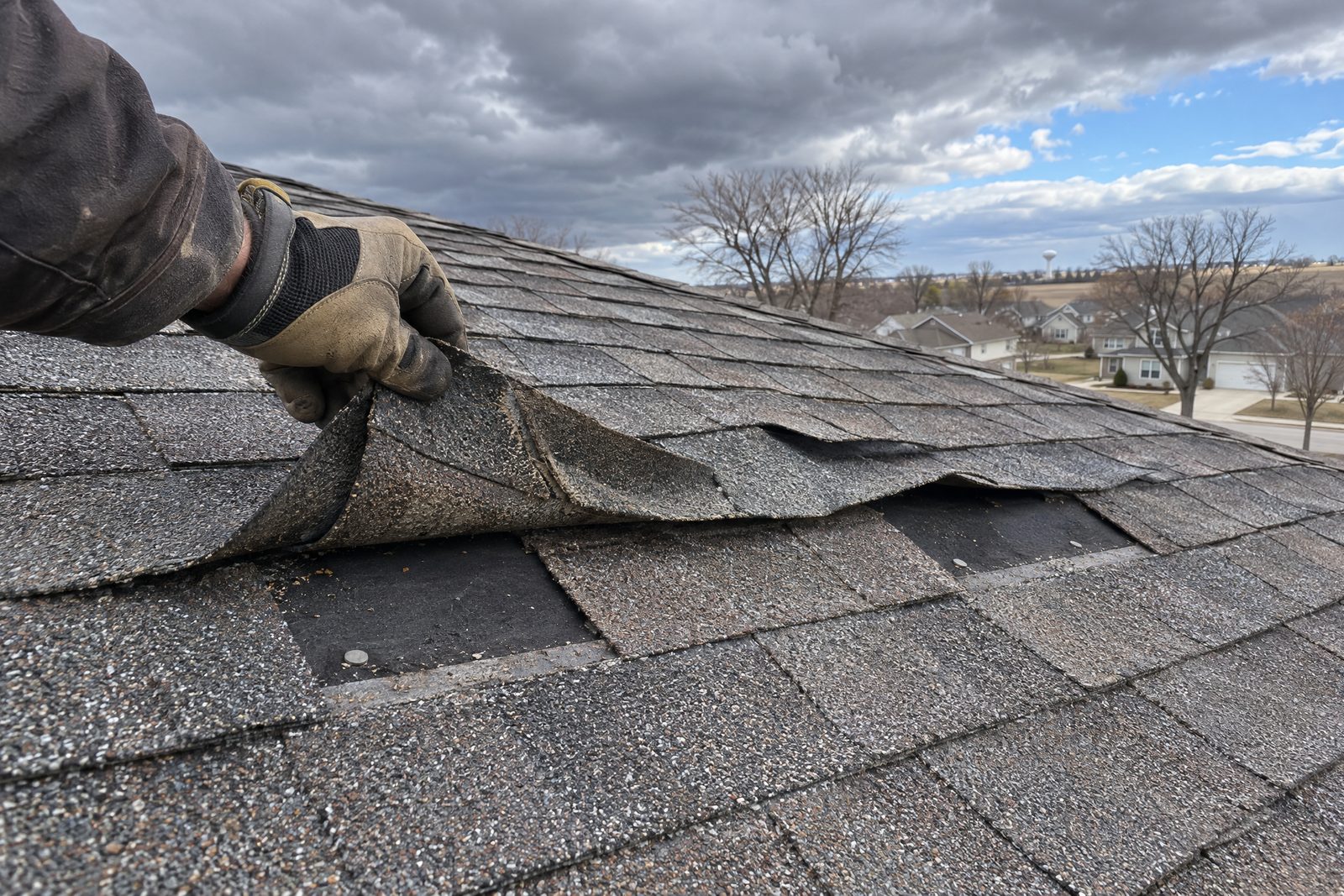
Wind-lifted shingles
Tabs that lifted and creased in a straight-line wind, resealed or replaced with shingles slid under the course above.
Valleys
Where two slopes meet, the water from both runs together. Worn or cut short valley shingles are rebuilt over new underlayment.
Nail pops and exposed nails
Nails that worked up through a shingle, often from a deck that moves with the seasons, reset and sealed.
We follow the water up the slope
A leak gives you one clue, the place where the water came out. The cause is somewhere above it. So we start in the attic with a flashlight, find the wet wood or the stained deck, and follow the trail uphill along the rafters. Then we go up on the roof and find the matching spot from outside.
On the roof, Dana works from the gutter up, as she does on every visit, so the parts above the leak get the closest look: the pipe boot two courses up, the chimney flashing, the joint where a dormer wall meets the slope. When both sides agree, we know which part failed. You get a photo of it before we touch it and a photo of the repair when we are done.
“Two other roofers told us our 1920s roof had to go. Dana climbed it, found the leak at the chimney flashing, and showed us the rest of the slate-look shingles still lying flat. She rebuilt the flashing with a cricket behind the chimney. Dry through a whole spring.”
Repair it, or replace it?
We look before we price. This is how the answer usually comes out on the roofs we climb.
| What we find | Usually | Why |
|---|---|---|
| A cracked pipe boot | Repair | One part failed; the roof around it is sound |
| Flashing caulked over at a chimney | Repair | Rebuild the flashing properly, keep the roof |
| A few wind-lifted shingles | Repair | Matching shingles slide in under the course above |
| A worn valley on a sound roof | Repair | Rebuild the valley over new underlayment |
| Hail hits on several slopes | Inspect for a claim | Storm damage may be covered by insurance |
| Brittle, curling shingles on every slope | Replace | A repair breaks more shingles than it fixes |
| Two layers of shingles already | Replace | The code does not allow a third layer over them |
Why small leaks grow over an Omaha winter
Eastern Nebraska roofs freeze and thaw many times a winter. Water that gets under a lifted shingle or into a gap in old flashing freezes, expands, and opens the gap a little wider. Snow that melts on a warm afternoon runs down the slope and refreezes at the cold eave, where it can back up under the shingles. A drip you barely notice in October can be a stain across the ceiling by March.
That is why we do not stop at the part that leaked. On the way up the slope we look at every other flashing joint, every pipe boot and the eaves, and the report marks any part that is close to failing as "watch it". You decide whether to fix it now, while we are on the roof, or later. Nothing on that list is priced until you ask.
If the shingles themselves turn out to be worn out on every slope, we say so plainly and explain how we can tell: lost granules in the gutters, shingles that crack when lifted, curling edges. A repair on a roof like that is money spent on the next leak. See roof replacement, or if a storm is the cause, hail and wind damage.
How a repair visit goes
Most repairs are found and fixed in one or two visits.
The attic first.
We find the wet wood and follow it uphill along the rafters.
Up the ladder, gutter to ridge.
Every part on the way up, with the closest look above the leak.
The failed part, photographed.
You see it before we touch it, and the price for fixing that part.
Fixed, then photographed again.
The repair, the rest of the report, and anything to watch.
Questions about roof repair
Why is my ceiling stain not under the leak?
Water that gets past the shingles runs down the underlayment, the deck or a rafter until it finds a seam to drip through. On a long slope that can be several feet from where it got in. We trace it from the attic and from the roof until both sides agree.
What fails first on an Omaha roof?
On the roofs we climb, the rubber collars round plumbing vents crack first, then the flashing where a roof meets a chimney or a wall, then shingles the wind has lifted. Freeze and thaw opens small gaps wider every winter, so a minor drip in fall can be a bigger one by spring.
Can you match my shingles?
Often closely, sometimes not exactly. Shingle colors weather and lines are discontinued. We bring samples up to the roof and photograph them next to yours before we start, so you see the match you are getting. On a back slope a near match is usually fine; on the front of the house we talk it through.
Is it worth repairing an older roof?
It is when one part failed and the shingles around it still lie flat, hold their granules and bend without cracking. It is not when the shingles are brittle on every slope, because each repair breaks more than it fixes. The report tells you which roof you have. See roof replacement.
Can you cover a leak in winter?
Yes. Some repairs, like a pipe boot or a section of flashing, can be done on a dry day in cold weather. Shingles do not seal well in the cold, so we hand seal what we lay in winter and come back to check it.
Dana tells you when a repair is enough
We work from our Papillion office across Omaha, Bellevue, La Vista, Gretna and Council Bluffs. If a storm caused the damage, start with hail and wind damage.

Dana Novak, owner and roofer
Dana climbs every roof herself, walks each slope from the gutter to the ridge and writes the report you get. She has roofed in the Omaha metro for eighteen years.
Book a repair visit
We answer the same working day. After a hailstorm, into the evening.
Water coming through a ceiling right now? Call or text: 402-555-0163
Tell us where it is leaking
Give us the address and where you see the stain or the drip, and whether it shows up in every rain or only with wind from one side. A photo of the ceiling helps.
Book a gutter to ridge roof check
We answer the same working day. After a hailstorm, into the evening.
Water coming through a ceiling right now? Call or text: 402-555-0163